Study Trip to Sweden, 22-24 August 2023
A study trip to Sweden was organised by Puhastusekspert on 22-24 August. The study trip included consortium members from East Tallinn Central Hospital, North Estonia Medical Centre, Valga Hospital, Rakvere Hospital, Järvamaa Vocational Education Centre, and Puhastusekspert.
The trainers for the study trip were Martin Älenmark, Head of Optiqo Sweden AB, and Karin Perling, trainer at Visera AB.
One of the main objectives of the study trip was to learn how relevant standards are applied in hospitals for determining cleaning quality. In March 2023, Standard EVS944:2023 Cleaning Requirements for Healthcare Facilities, which regulates cleaning in hospitals and healthcare institutions, came into force in Estonia. This is a translation of a standard initiated by the Danish Health Authority in 2008 in Denmark (Infection control in the health care sector – Part 10: Requirements for Cleaning). This standard is used to measure cleaning quality in Denmark, Sweden, Norway, and Iceland.
The trainers for the study trip were Martin Älenmark, Head of Optiqo Sweden AB, and Karin Perling, trainer at Visera AB.
One of the main objectives of the study trip was to learn how relevant standards are applied in hospitals for determining cleaning quality. In March 2023, Standard EVS944:2023 Cleaning Requirements for Healthcare Facilities, which regulates cleaning in hospitals and healthcare institutions, came into force in Estonia. This is a translation of a standard initiated by the Danish Health Authority in 2008 in Denmark (Infection control in the health care sector – Part 10: Requirements for Cleaning). This standard is used to measure cleaning quality in Denmark, Sweden, Norway, and Iceland.
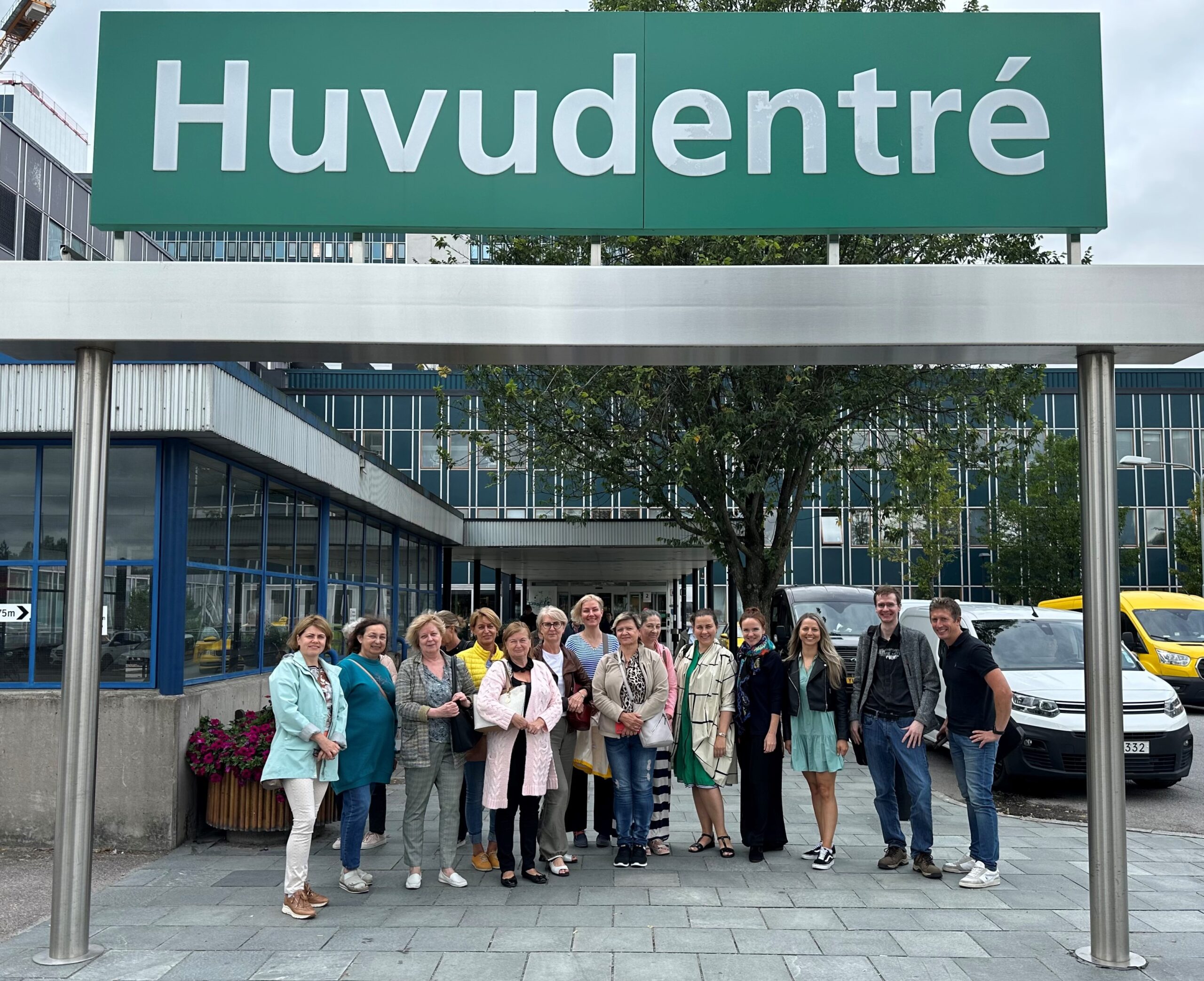
Danderyd Hospital, Stockholm, Optiqo software
During the study trip, we visited Danderyd Hospital in Stockholm, where we learnt about how they organised hospital cleaning, the maintenance of cleaning textiles, the assembly of cleaning trolleys, and how they used Optiqo software for work planning and data collection.
Additionally, we familiarised ourselves with the capabilities of Optiqo software, which is applied in optimising, organising, collecting data, and analysing cleaning operations. Implementing Optiqo software for assessing cleaning quality saves a significant amount of time and provides an excellent opportunity to quickly implement necessary changes based on statistical data conclusions.
During the study visit, we gained a great deal of knowledge and also confirmed much of what we already knew. Learning from the experience of others is of the greatest value, as it helps quickly implement existing solutions and avoid potential errors.
As an important fact, it can be highlighted that according to studies, 80% of infections are transmitted via hands, which is why hand hygiene is of crucial importance. In a hospital setting, to prevent infections, it is important first to understand who is moving within the hospital premises – patients, doctors, nurses, caregivers, cleaning staff, visitors, logistics personnel, maintenance technicians, etc. Secondly, it is necessary to raise the awareness and skills of all these individuals to prevent and hinder the spread of infections. Therefore, the key to health safety lies primarily in trained personnel.
Additionally, we familiarised ourselves with the capabilities of Optiqo software, which is applied in optimising, organising, collecting data, and analysing cleaning operations. Implementing Optiqo software for assessing cleaning quality saves a significant amount of time and provides an excellent opportunity to quickly implement necessary changes based on statistical data conclusions.
During the study visit, we gained a great deal of knowledge and also confirmed much of what we already knew. Learning from the experience of others is of the greatest value, as it helps quickly implement existing solutions and avoid potential errors.
As an important fact, it can be highlighted that according to studies, 80% of infections are transmitted via hands, which is why hand hygiene is of crucial importance. In a hospital setting, to prevent infections, it is important first to understand who is moving within the hospital premises – patients, doctors, nurses, caregivers, cleaning staff, visitors, logistics personnel, maintenance technicians, etc. Secondly, it is necessary to raise the awareness and skills of all these individuals to prevent and hinder the spread of infections. Therefore, the key to health safety lies primarily in trained personnel.

A very important opportunity in health risk management lies in the cooperation between hospital staff and the cleaning team. This cooperation is found to be lacking in both Swedish and Estonian hospitals. During the study visit, it was repeatedly concluded that hospitals would be significantly cleaner and infection risks lower if people from management, infection control, and cleaning departments were involved in the development and organisation of various guidelines, training, and procurements.
We reiterated the golden rule of cleaning: the crucial outcome of cleaning is aseptic cleaning, meaning cleaning is always performed from top to bottom (upper surfaces are cleaned first, then moving towards the floor) and from cleaner to dirtier (the dirtiest surfaces are cleaned last).
The participants were very satisfied with the study visit, and we are excited to implement what we have learnt.
We reiterated the golden rule of cleaning: the crucial outcome of cleaning is aseptic cleaning, meaning cleaning is always performed from top to bottom (upper surfaces are cleaned first, then moving towards the floor) and from cleaner to dirtier (the dirtiest surfaces are cleaned last).
The participants were very satisfied with the study visit, and we are excited to implement what we have learnt.
