
Occupational Diseases and Attitudes Towards Work in the Cleaning Sector
 Cleaning operatives and cleaning managers feel that their work is very meaningful. However, they experience physical and psychological stress, which is also influenced by the work environment.
As part of the international ErgoClean (Cleaning Ergonomics- to Prevent Occupational Diseases and Accidents) project, various surveys and measurements were conducted to understand how their work affects their physical and mental health.
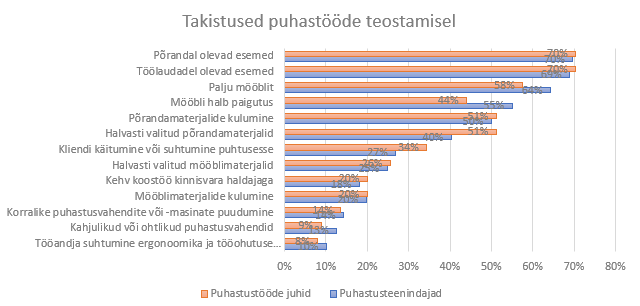
In Survey I, the biggest obstacles to performing cleaning tasks were investigated. Both cleaning operatives and cleaning managers agreed that the efficiency of work is most affected by clutter on the floor, clutter on work desks, and when there is a lot of furniture in the room (Figure 1).
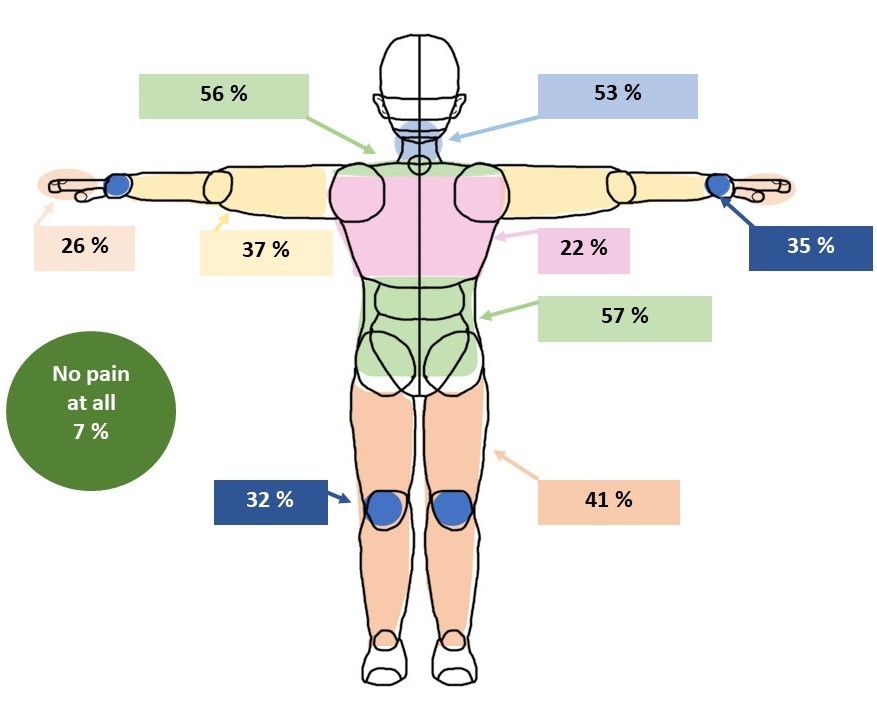
In Survey II, the number of individuals experiencing musculoskeletal disorders was investigated, and it was found that most pain is experienced in the lower back, shoulders, and neck (Figure 2). The legs also experience a significant load.
In Survey III, it was investigated how cleaning operatives and cleaning managers assessed the impact of work on their physical and mental health. 69% of cleaning operatives said their work was physically demanding, and 72% of cleaning managers assessed their work as mentally demanding (Figure 3).

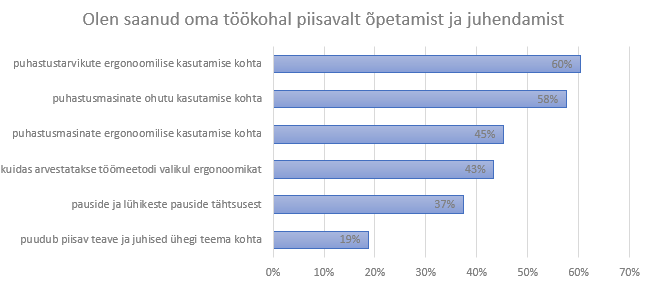
Survey IV investigated how much the choice of tools and methods affects the physical strain of cleaning work. Cleaning operatives were most satisfied with the training on the use of cleaning supplies (Figure 4). 60% of respondents felt they had received sufficient instructions on the ergonomic use of cleaning supplies. According to the study, the importance of breaks and short breaks has not been sufficiently explained. Another concerning result is that one in five cleaning operatives had not received sufficient instructions on any of the topics surveyed.
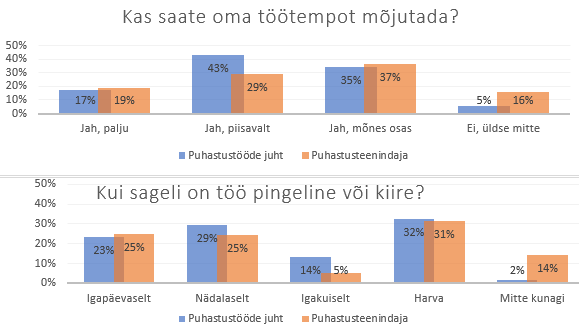
Finally, it was investigated what cleaning operatives’ and cleaning managers’ experiences are regarding workload and work pace. Cleaning managers can sufficiently influence their work pace, while cleaning operatives can only do so in some aspects. Both cleaning operatives and cleaning managers believed that their work was rarely stressful or fast-paced (Figure 5).
The studies were conducted in November 2022 in Finland, Estonia, Hungary, and the Netherlands. Surveys were sent to ten organisations in each country, and a total of 267 cleaning operatives and 147 cleaning managers responded.