info@puhastusekspert.ee +372 5611 1048
Estonian Cleaning Sector Vocational Examinations in Latvia
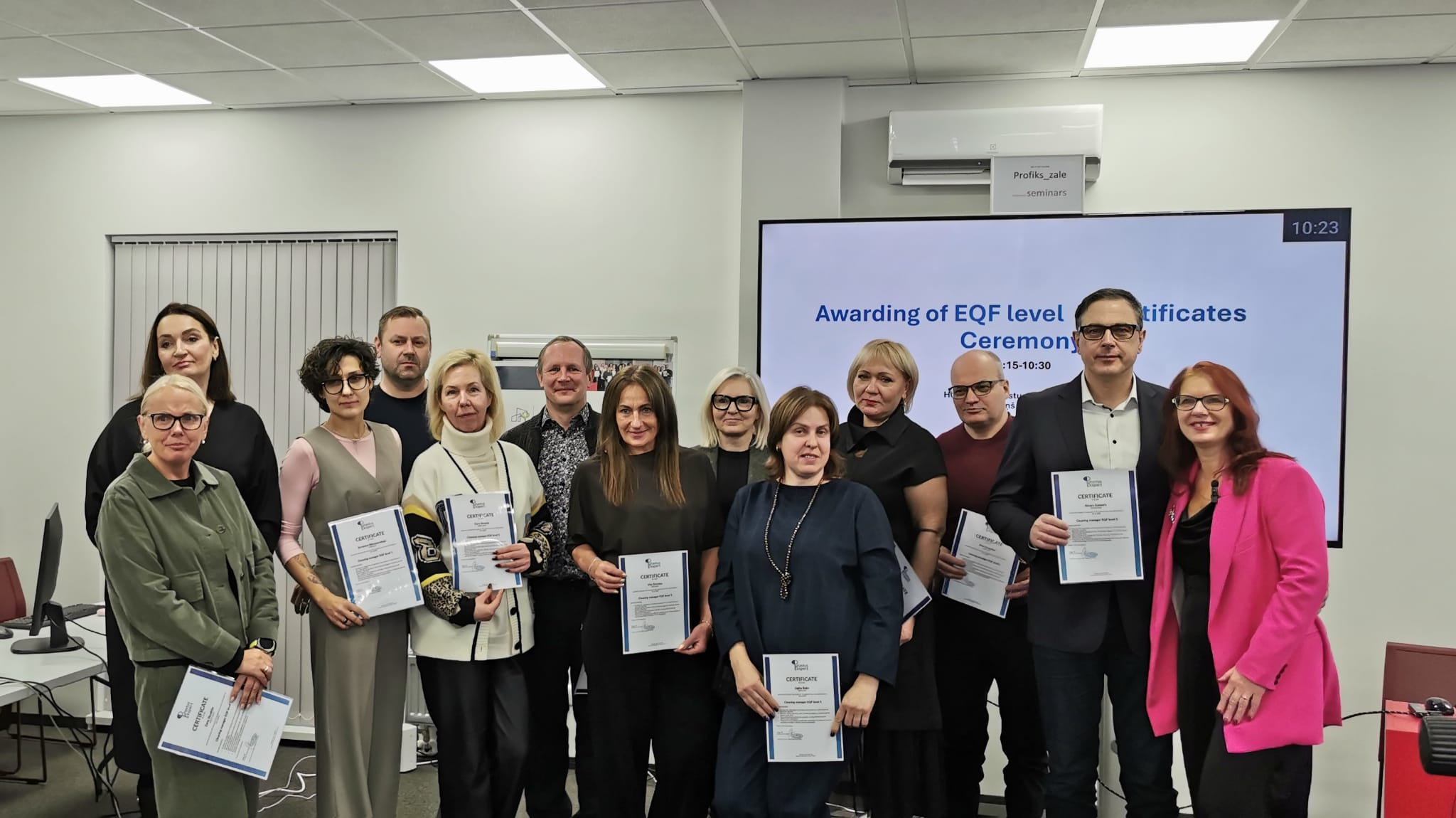
The development of the cleaning sector requires a systematic approach, high-quality training, and clearly defined professional qualification levels. Based on this principle, a cooperation project between Estonia and Latvia was launched, with the aim of introducing European Qualifications Framework (EQF) level-based training programmes and vocational examinations in Latvia as well.
From the perspective of successful cleaning operations, a key issue is the knowledge, skills, and attitude of cleaning managers and supervisors responsible for guiding cleaning service staff. Since the expertise of managers is passed on to cleaning personnel, it is essential that the knowledge transferred is of a sufficiently high standard.
From the perspective of successful cleaning operations, a key issue is the knowledge, skills, and attitude of cleaning managers and supervisors responsible for guiding cleaning service staff. Since the expertise of managers is passed on to cleaning personnel, it is essential that the knowledge transferred is of a sufficiently high standard.
Estonia’s Experience as a Strong Foundation
In Estonia, professional qualifications in the cleaning sector have been awarded for more than 20 years. Over this period, a well-functioning and reliable system has been established, supporting both the professional development of employees and the high-quality performance of organisations. In Latvia, such a system had so far been lacking, which created an opportunity to share Estonia’s experience and develop a joint cooperation project.
The core of the project was the delivery of EQF Level 4 and Level 5 training programmes:
The core of the project was the delivery of EQF Level 4 and Level 5 training programmes:
In addition to the training, the aim was to carry out pilot vocational examinations in Latvia, structured similarly to the Estonian system. The Latvian Cleaning Companies Association, as the project partner, gained valuable experience and insights for launching a vocational qualification system in the Latvian cleaning sector.
A major challenge is that cleaning services in Latvia are not officially recognised as a formal profession. This is the reason why, until now, there have been no occupational standards or vocational examinations in the Latvian cleaning industry.
Projekti lõppseminar Lätis
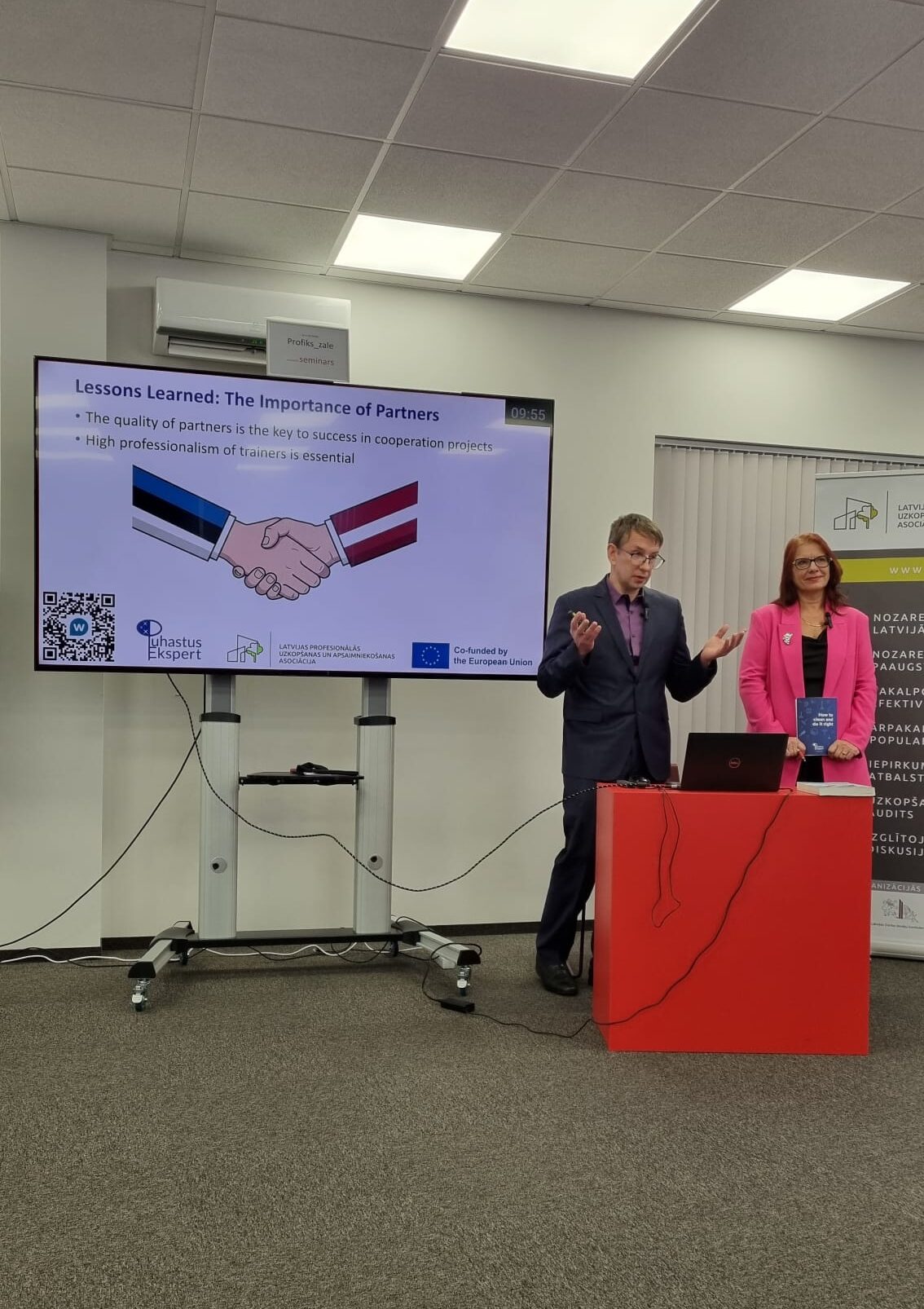
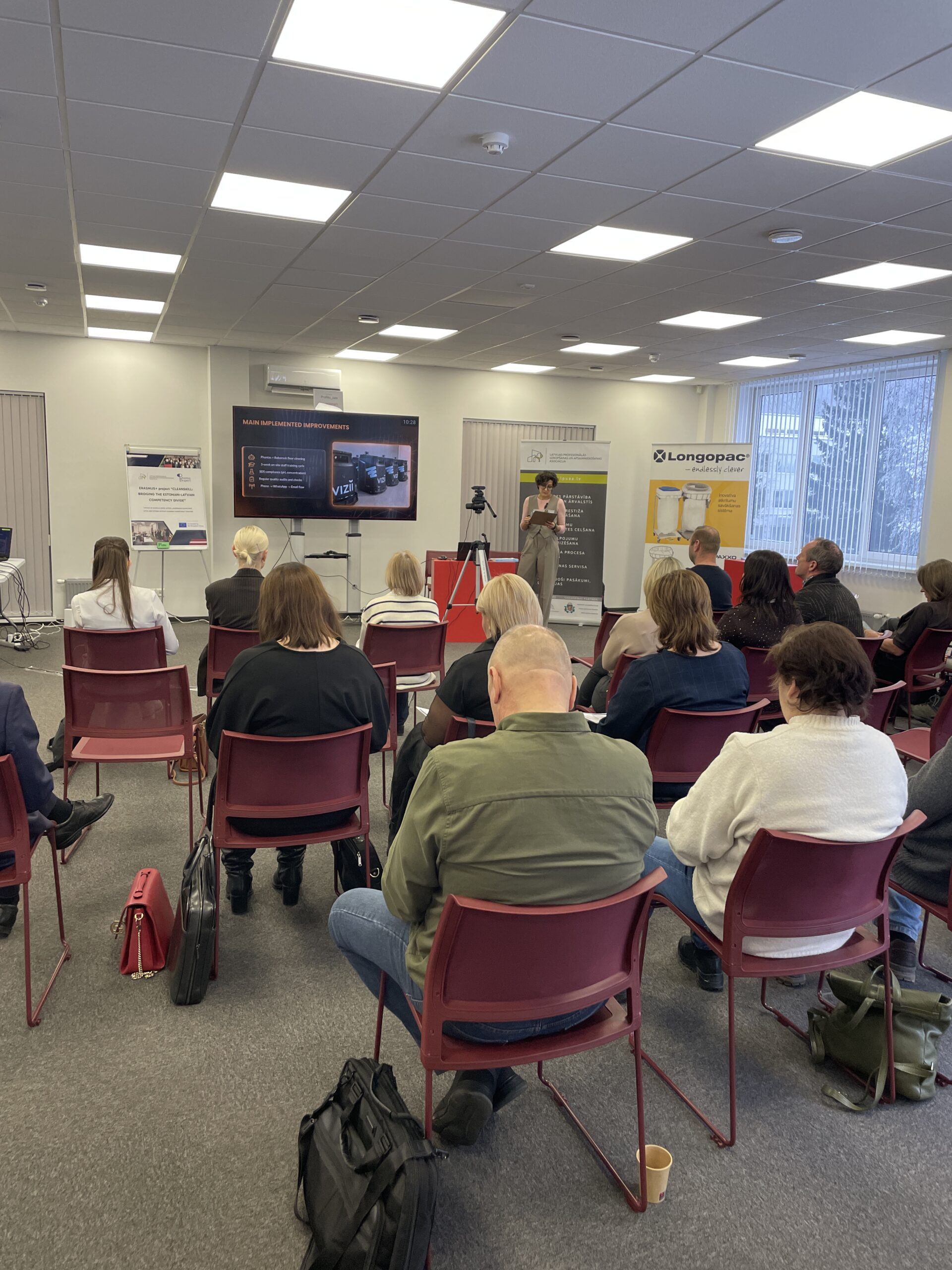
On 23 January, the project’s closing seminar took place in Latvia, providing an opportunity to share experiences, present results, and discuss future directions. Participants of the project also gave presentations, highlighting concrete examples of what and how much has changed in practical daily operations following the training programmes.
Helge Alt also spoke at the seminar and emphasised in her presentation:
Helge Alt also spoke at the seminar and emphasised in her presentation:
The full seminar recording can be viewed from THIS link.
Results of the Training Programmes and Vocational Examinations
The outcomes of the project were significant:
During the approximately one-and-a-half-year process, a clear shift in mindset was observed among the participants. All those involved in the EQF Level 5 pilot programme actively worked on developing cleaning processes at their own sites and presented the results achieved throughout the training.
The outcomes were measurable both in terms of time and financial efficiency, and in several cases exceeded expectations. The progress achieved clearly demonstrated that systematic training and vocational assessment create real value for both employees and organisations.
If desired, you can also explore how the EQF Level 4 training and vocational examination were conducted in Latvia.
Cooperation as the Key to Success
The project provided an opportunity to apply Estonia’s valuable experience in an international context. It once again confirmed that cooperation is a key factor in achieving progress. Collaboration accelerates development and helps deliver better results.
Author: Maria Liis Alt
Author: Maria Liis Alt