info@puhastusekspert.ee +372 5611 1048
What Did We Notice About Cleaning in South America?
Puhastusekspert travelled across the world to gather inspiration and fresh experiences in the field of cleaning. We spent three weeks in Ecuador – a country that managed to surprise us at almost every step. During that time, we took a total of 12 flights, visited numerous different airports, and saw firsthand how cleaning culture works on the other side of the globe.
Although this was officially a vacation, we simply could not completely turn off our “cleaner’s eye.”
In short: the standard of cleaning in Ecuador is good. People are hardworking, responsible, and a clean environment clearly seems truly important to them.
Although this was officially a vacation, we simply could not completely turn off our “cleaner’s eye.”
In short: the standard of cleaning in Ecuador is good. People are hardworking, responsible, and a clean environment clearly seems truly important to them.
Airports: 12 Flights = 12 Small Cleaning Studies
The trip began, as always, at Tallinn Airport, which was just as pleasant and clean as ever. From there, we moved through larger European airports, where the picture became more varied.
We noticed that in many places, a large amount of cleaning chemicals are used even when there is no real need for them. The default strategy everywhere seemed to be: “spray everything, just in case.” Whether this actually results in cleanliness is another question.
We were also surprised by the contrast in one airport’s cleaning equipment: we encountered both old-school spanish mops and an extremely impressive floor-scrubbing robot at the same time
We noticed that in many places, a large amount of cleaning chemicals are used even when there is no real need for them. The default strategy everywhere seemed to be: “spray everything, just in case.” Whether this actually results in cleanliness is another question.
We were also surprised by the contrast in one airport’s cleaning equipment: we encountered both old-school spanish mops and an extremely impressive floor-scrubbing robot at the same time
Ecuador Surprised Us From the Very First Moment
When we were arriving at Quito Airport, we were pleasantly surprised by the clean and welcoming environment waiting for us. The toilets especially stood out. They were in noticeably better condition than in many European airports.
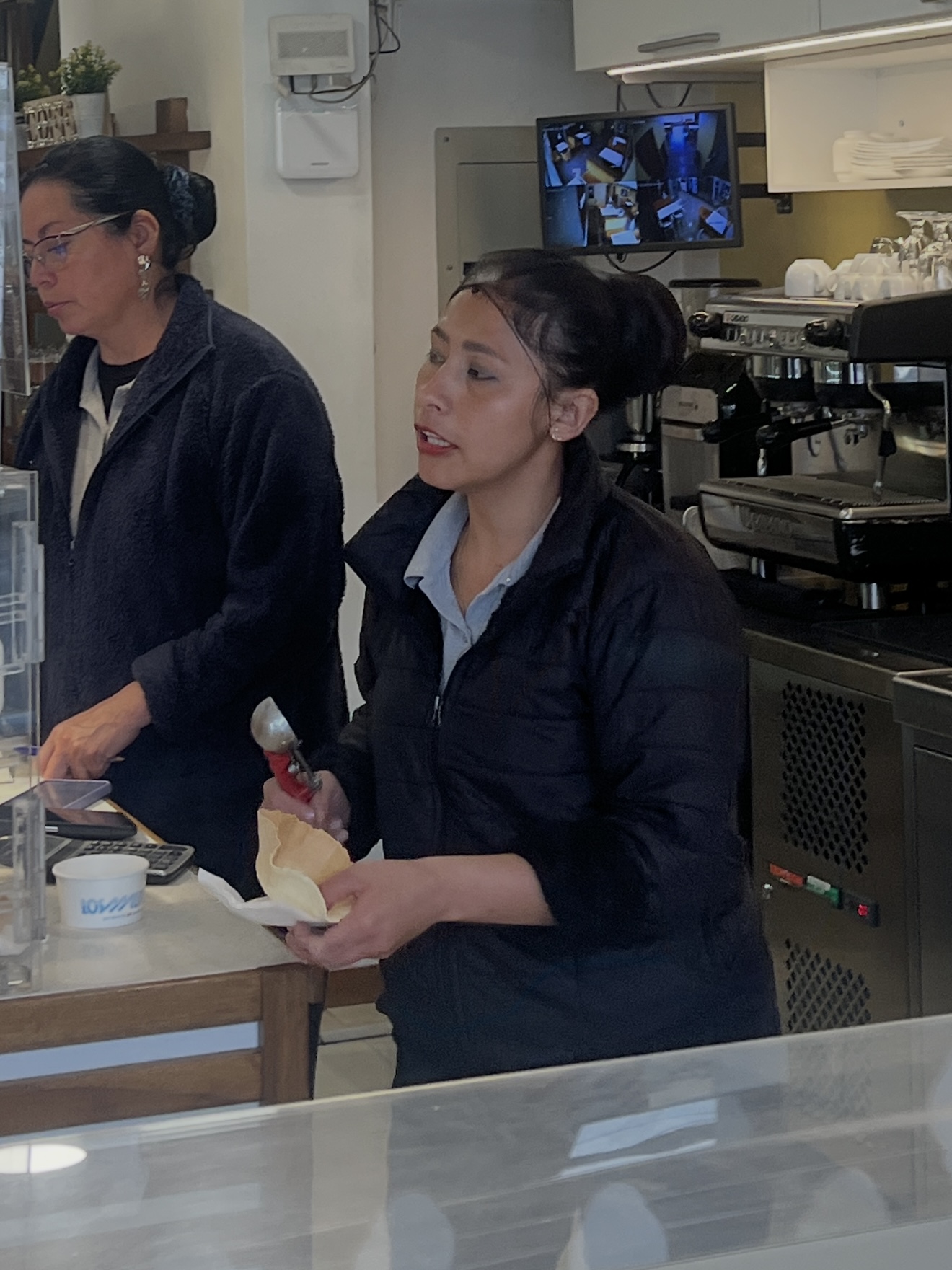
Hygiene overall seems to be highly valued in Ecuador. For example, all food service staff wore hairnets. At the same time, we also came across situations that made us raise an eyebrow.
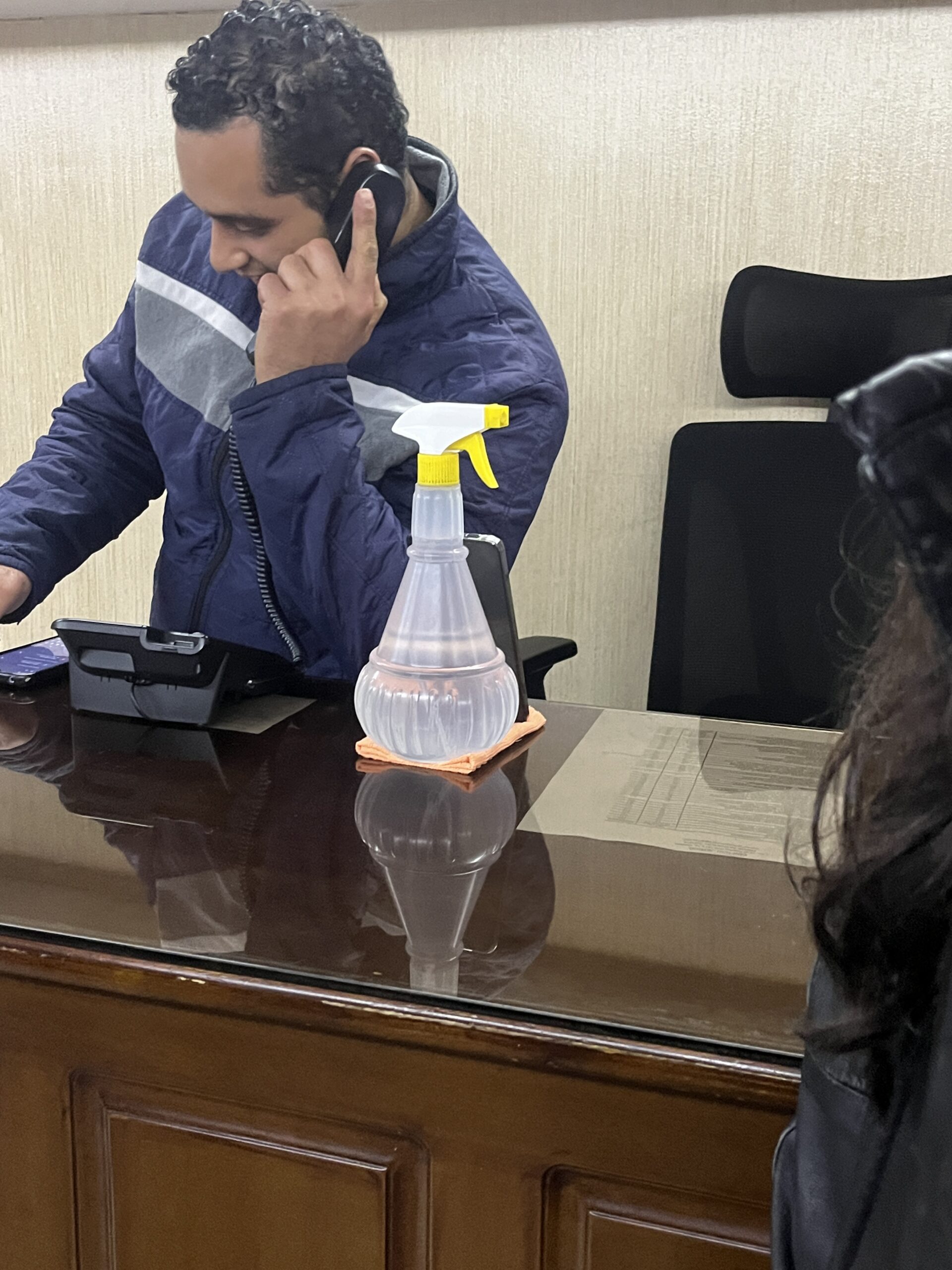
In many places, unknown cleaning solutions were used in anonymous spray bottles. In restaurants, these were generously sprayed directly onto tables, but the more solution was applied, the stickier the table seemed to become. Sometimes it felt as though your hand simply did not want to detach from the surface.
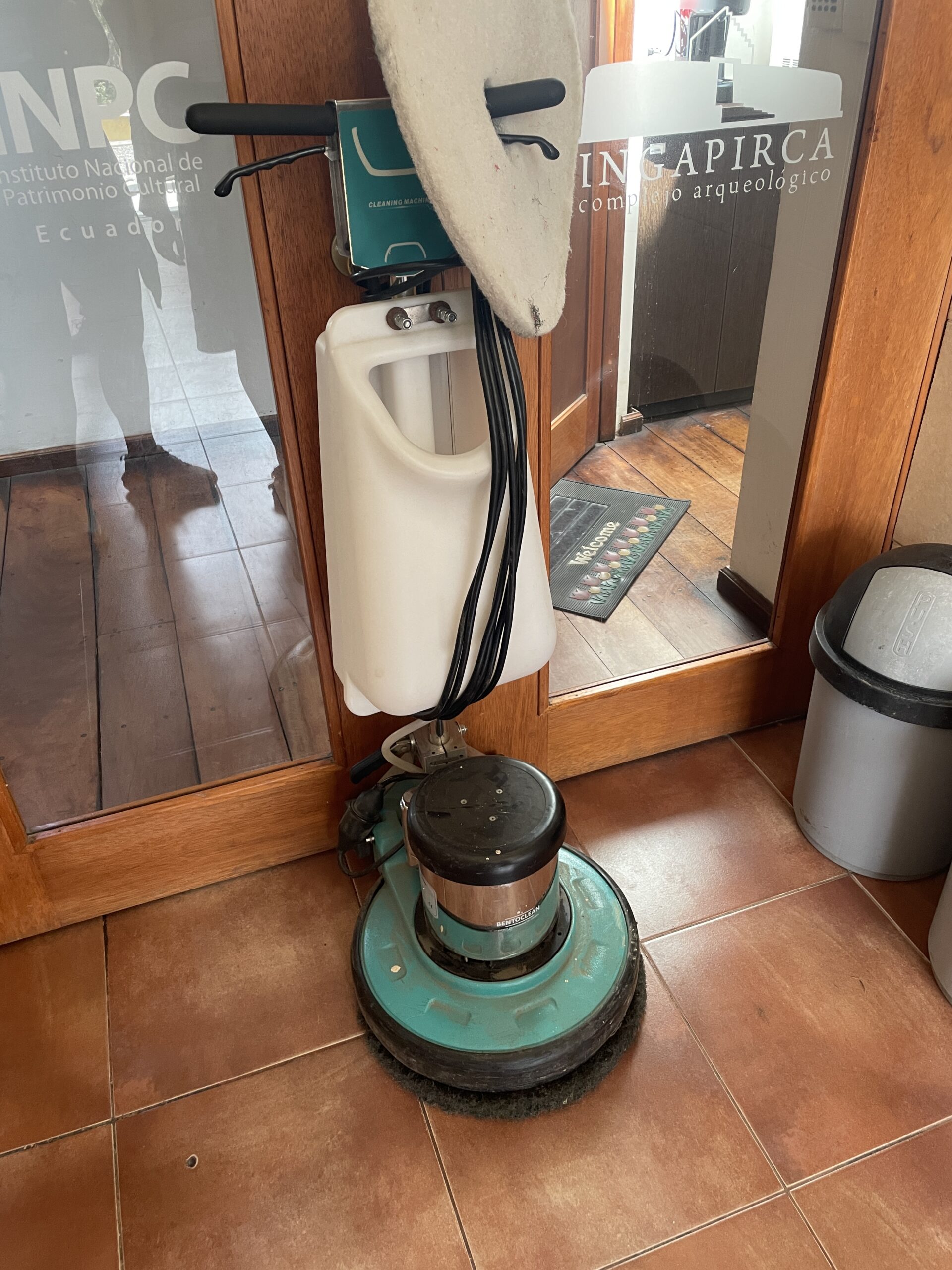
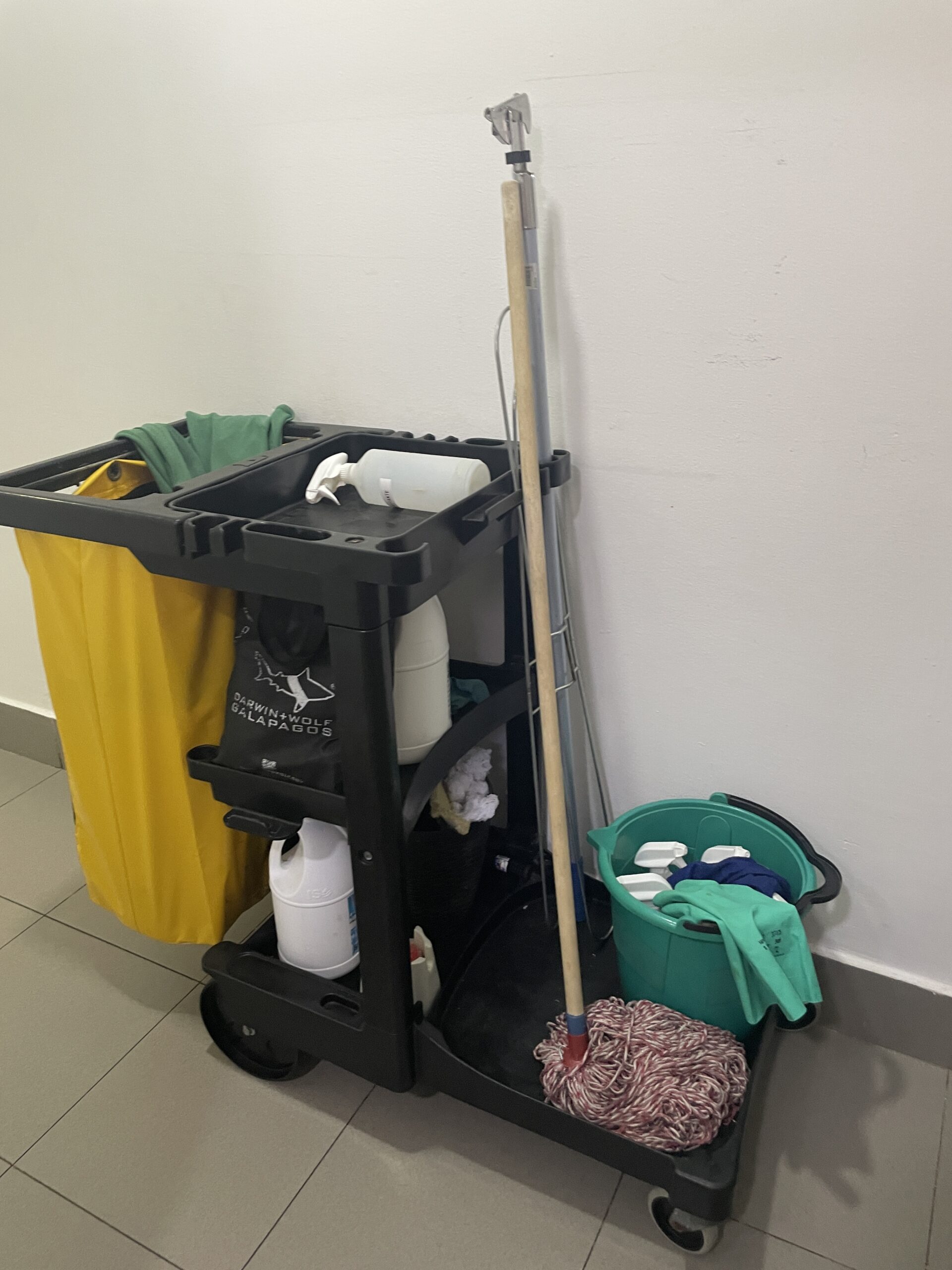
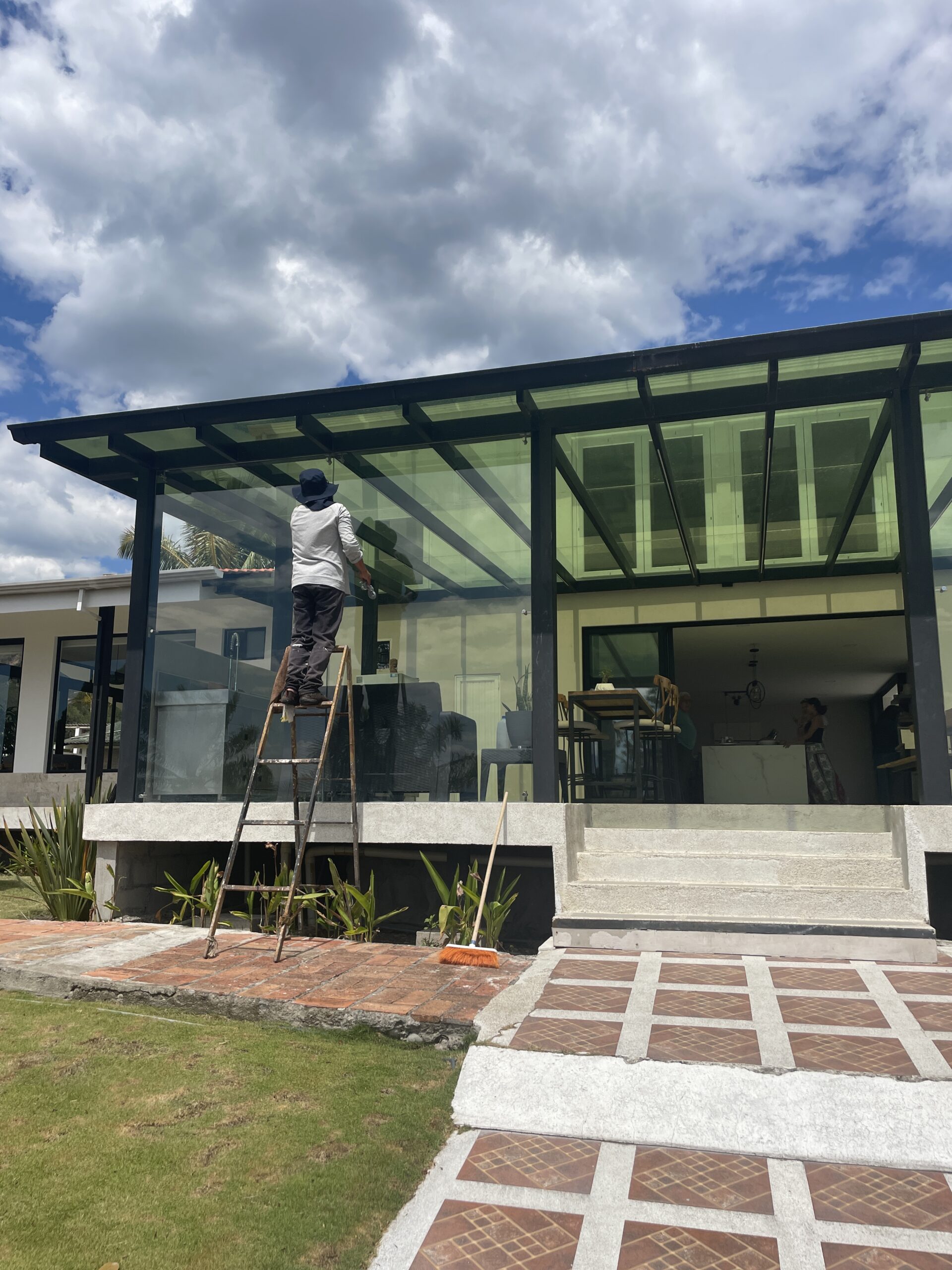
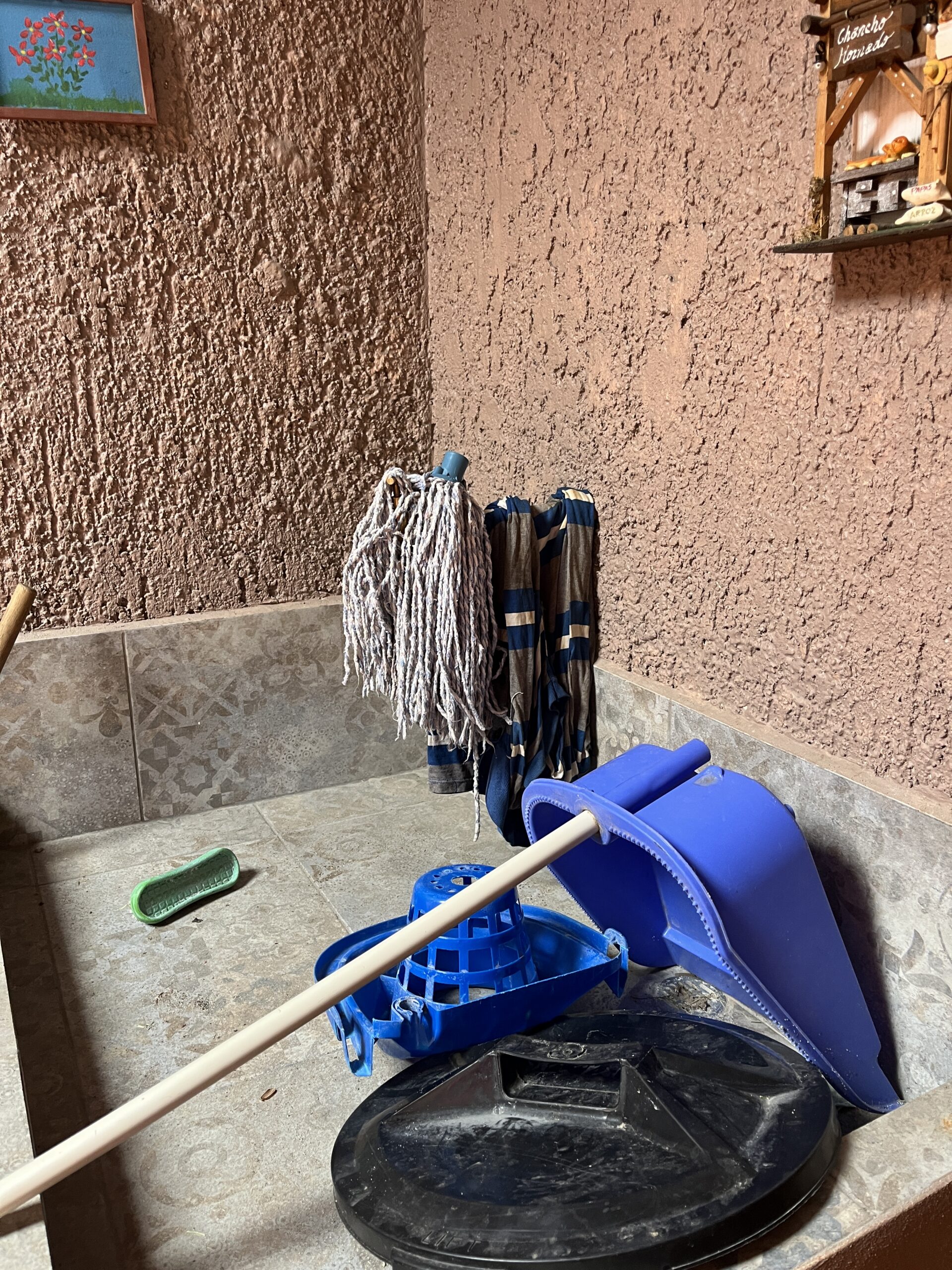
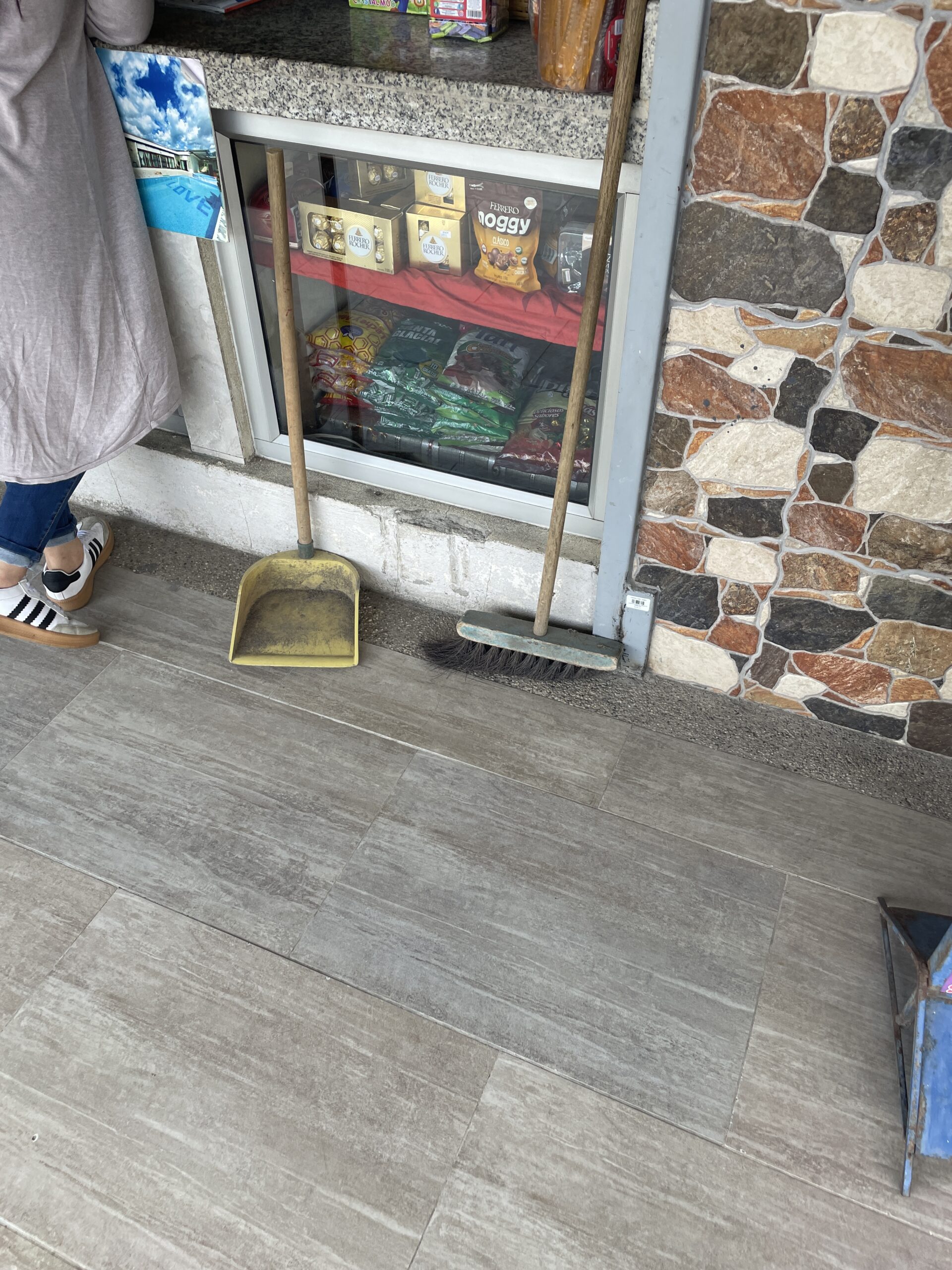
The willingness to work, however, was truly impressive. Brush mops were everywhere, and they were used to wash everything: restroom floors, corridors, and even streets.
Often, mop handles were so long that they reached nearly two metres – considering that local people are generally shorter on average then people in Estonia, there is certainly room for improvement in ergonomics.
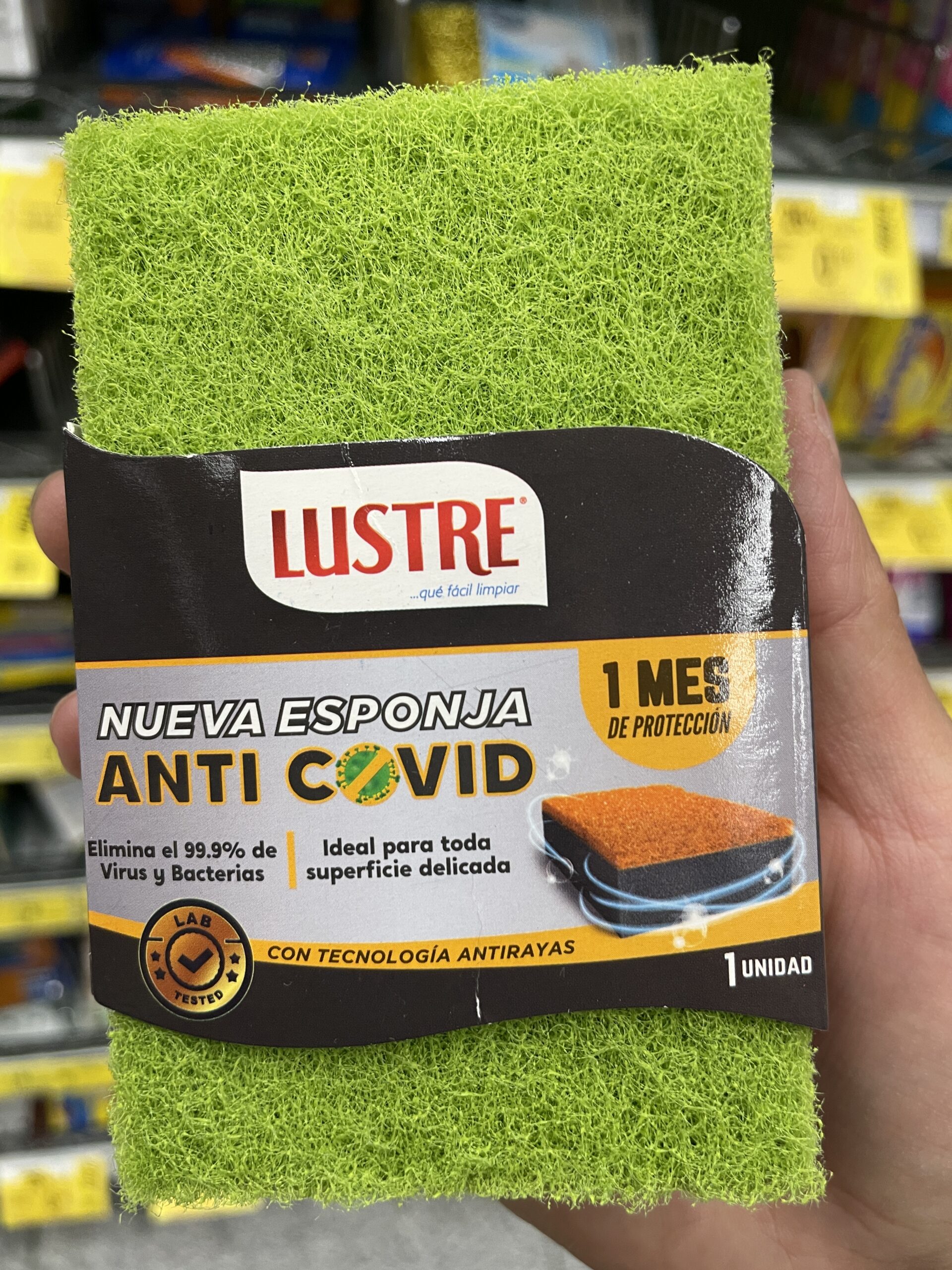
Even though we were on holiday, we could not resist exploring local cleaning products. For instance, we found an interesting item: a “Covid-resistant” dishwashing sponge. As we know, Covid is an airborne droplet infection, so how a sponge could prevent the spread of the virus remains rather unclear.
Hygiene overall seems to be highly valued in Ecuador. For example, all food service staff wore hairnets. At the same time, we also came across situations that made us raise an eyebrow.
In many places, unknown cleaning solutions were used in anonymous spray bottles. In restaurants, these were generously sprayed directly onto tables, but the more solution was applied, the stickier the table seemed to become. Sometimes it felt as though your hand simply did not want to detach from the surface.
The willingness to work, however, was truly impressive. Brush mops were everywhere, and they were used to wash everything: restroom floors, corridors, and even streets.
Often, mop handles were so long that they reached nearly two metres – considering that local people are generally shorter on average then people in Estonia, there is certainly room for improvement in ergonomics.
Even though we were on holiday, we could not resist exploring local cleaning products. For instance, we found an interesting item: a “Covid-resistant” dishwashing sponge. As we know, Covid is an airborne droplet infection, so how a sponge could prevent the spread of the virus remains rather unclear.
The Amazon Rainforest
During the trip, we also reached the Amazon rainforest, where life moves at a completely different pace and where modern cleaning agents and tools have only recently begun to be used. And it was immediately noticeable. Locals were so enthusiastic about cleaning products that they used them very generously – almost everywhere and on everything. The result was restrooms where stone-tiled floors were so slippery that even with proper hiking boots, staying upright was quite a challenge. Many surfaces were also sticky, as over time different cleaning products and dirt had layered onto them. Setting aside this global problem of buildup, what stood out most was the enormous work ethic of the local people and their sincere concern for customer comfort. They truly did their best to make sure everything was done properly. They simply still lack some knowledge and skills.
Street Cleanliness
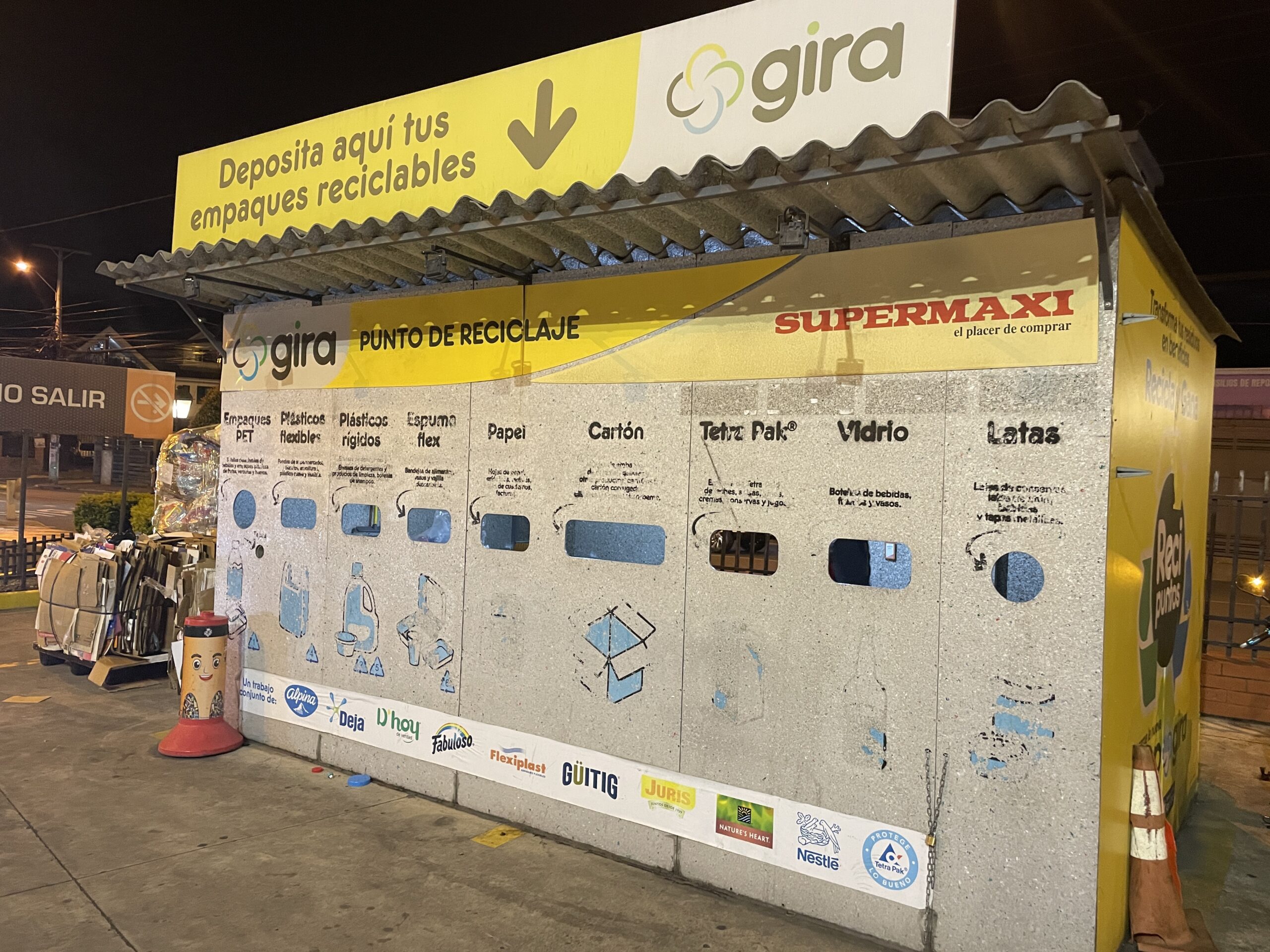
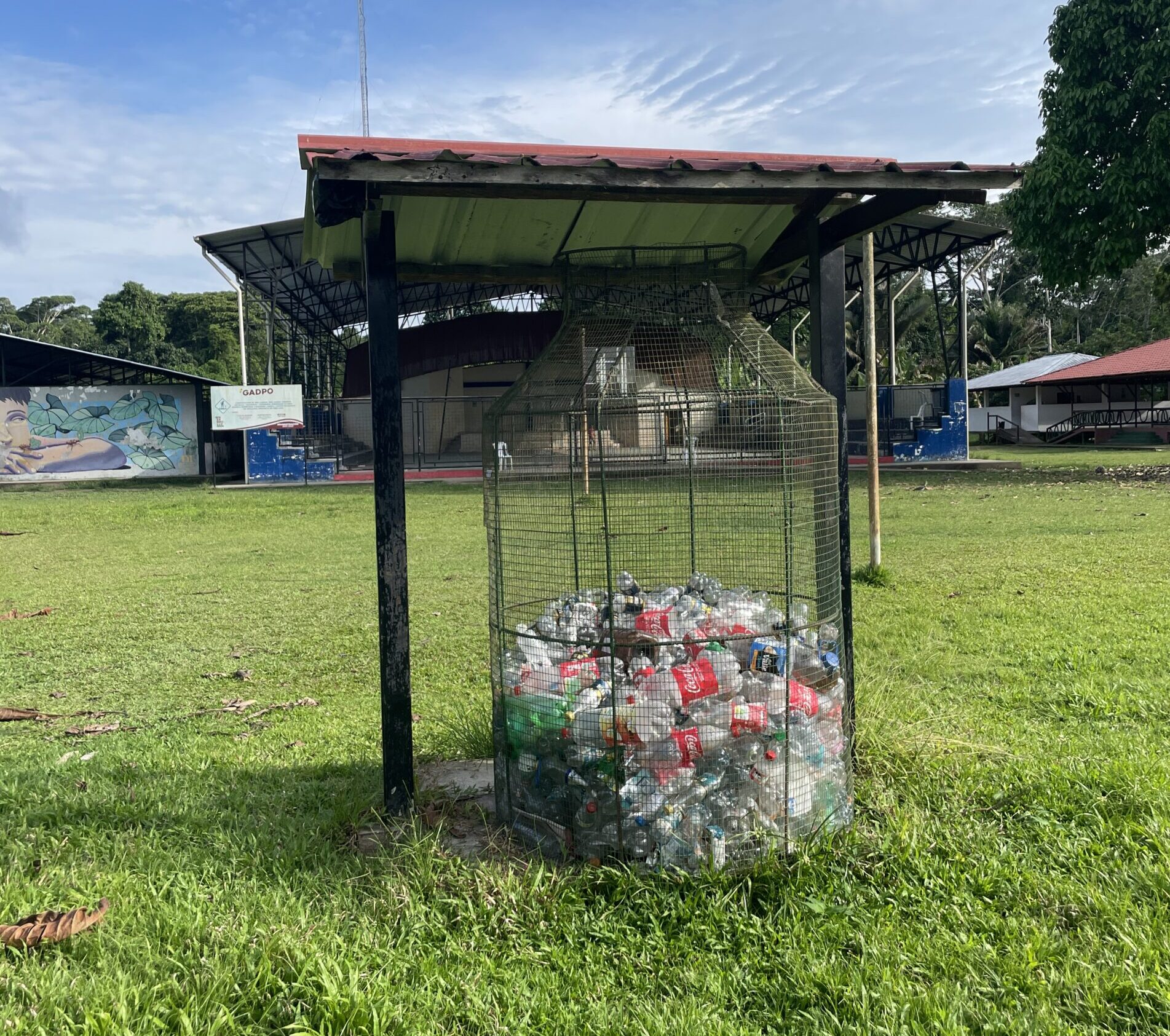
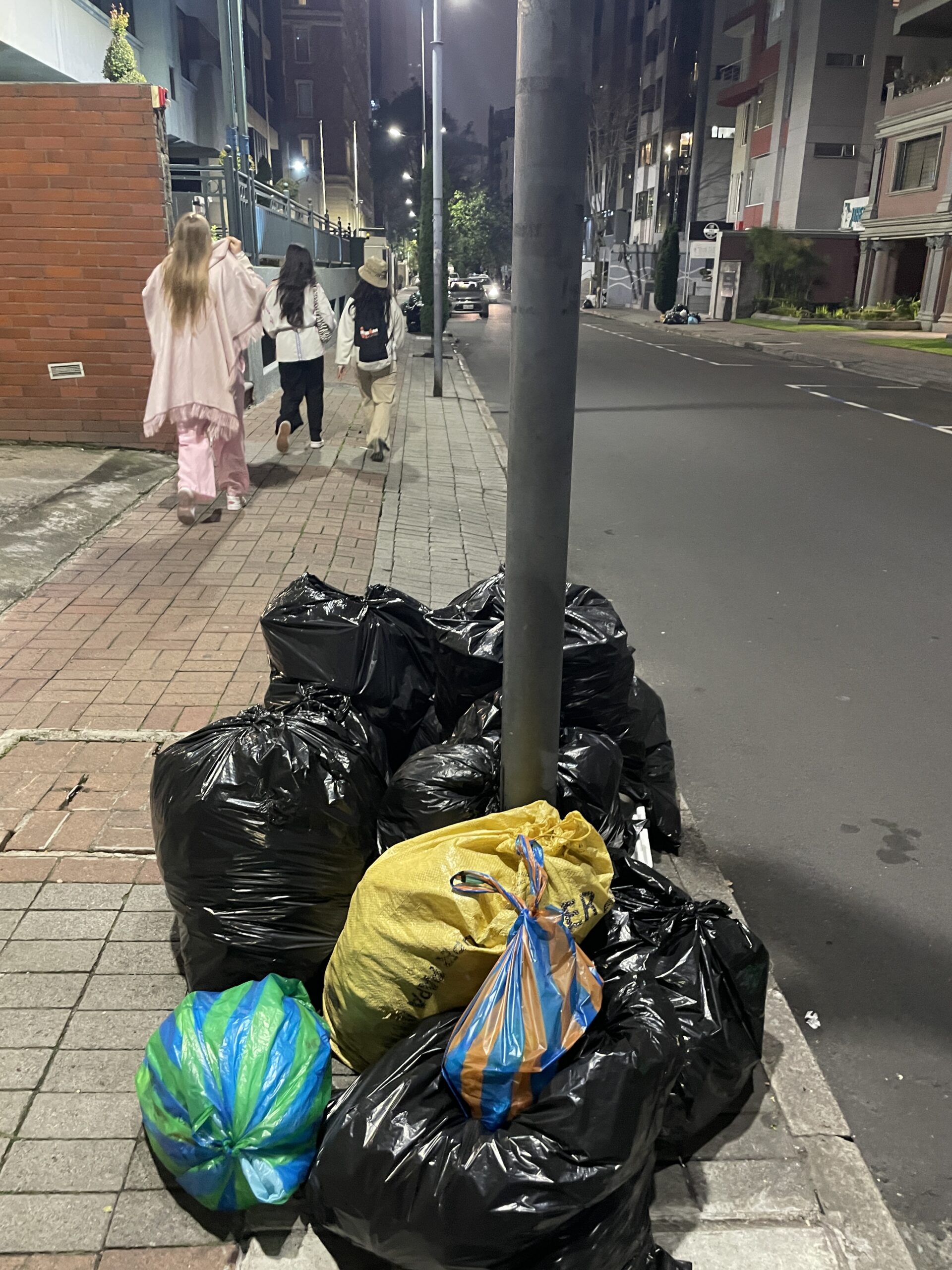
Ecuador’s street environment deserves special praise. There simply was no litter on the streets. At the same time, there were hardly any trash bins. It seems their system is simple: everyone takes their rubbish with them. In addition, there was a waste sorting system in place. In communities, we could see waste being collected and separated. A fun example is how bottle returns are organised in Ecuador: large, bottle-shaped metal frames are used for collecting deposit containers. It is similar to our deposit-return system, except people do not receive money for returning bottles. This did not discourage locals — bottles were still brought back nonetheless.
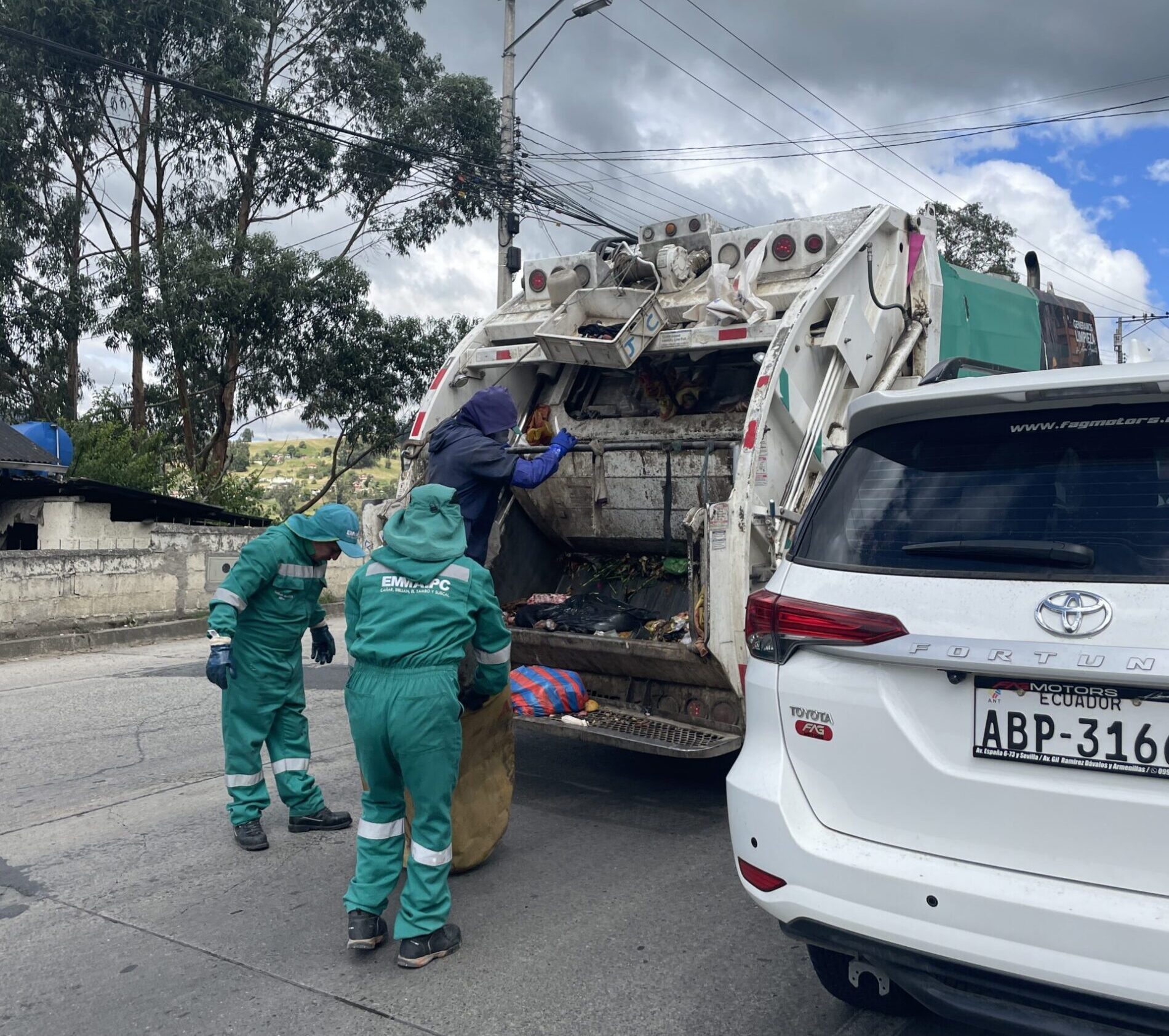
On one hand, everything was very simple and done manually, yet on the other hand, surprisingly systematic. Streets are cleaned regularly, and green areas are clearly important to the community. In parks, we saw workers in green uniforms who truly did everything: weeded, swept, maintained public spaces, and even took care of homeless dogs. For example, on New Year’s Eve, many life-sized figures made of clothes and paper are burned, creating a huge amount of debris in the streets. By midday on January 1st, most streets were already clean again.
Author: Maria Liis Alt
On one hand, everything was very simple and done manually, yet on the other hand, surprisingly systematic. Streets are cleaned regularly, and green areas are clearly important to the community. In parks, we saw workers in green uniforms who truly did everything: weeded, swept, maintained public spaces, and even took care of homeless dogs. For example, on New Year’s Eve, many life-sized figures made of clothes and paper are burned, creating a huge amount of debris in the streets. By midday on January 1st, most streets were already clean again.
Author: Maria Liis Alt