
Informed Action on Bed Bugs
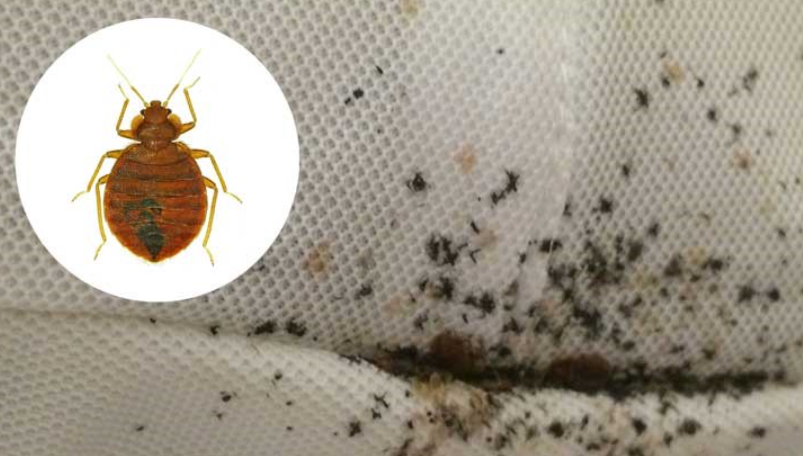 In recent weeks, alarming reports have reached the media regarding the bed bug situation in France. This is a pandemic-like situation where bed bugs have infested people’s homes, public transport, etc. According to official statistics, France is already spending approximately 230 million euros annually on bed bug control. How can Estonia prepare?
What Is a Bed Bug?
The bed bug has been around for a very long time. There are approximately 40,000 known bed bug species worldwide, with about 400 species in Estonia. Bed bugs range from 1 mm to 11 cm in length and can live in very diverse conditions. Currently, the common bed bug (Cimex lectularius) is the one causing problems, feeding on human and animal blood. Both male and female bed bugs feed on blood, but females do so more as eggs develop in their bodies. The dust mite is another common human companion, but it does not feed on blood. Bed bugs are currently the most problematic pest insects worldwide. A bed bug egg develops in 4-5 days. It reaches maturity in 3-8 weeks, shedding its skin about 5 times during this period. They lay approximately 3-5 eggs per day; a female bed bug lays 50-500 eggs during her lifetime. Bed bugs are capable of surviving for a very long time without food. The lifespan of a bed bug is approximately 18 months. Temperature is the main limiting factor for their lifespan – at 18°C, their lifespan is 120 days, but at 28°C, it is 30 days. Development stops below 15°C and above 37°C. Bed bugs typically feed about 2-4 times a week. They consume blood 7 mm3 at a time.
Bed bugs have long plagued humans. They were a problem in America in the 1940s, and it wasn’t until the 1950s that pesticides were introduced to help control the situation. The main reason bed bugs are spreading so rapidly again is travel.
Bed Bug Detection
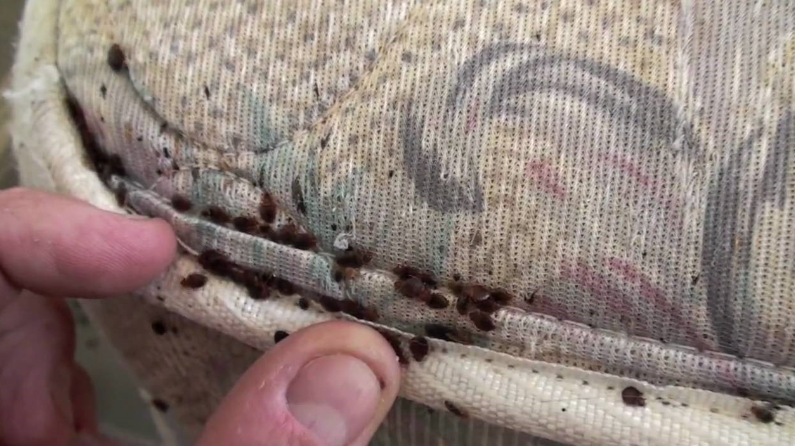 The bed bug that infests humans is an oval-shaped insect, about 5 mm long, and active at night. Before feeding, it is light brown; after sucking blood, it becomes round and dark. Within 5-10 minutes, a bed bug sucks an amount of blood equivalent to five times its body weight. Once engorged, it returns to its hiding place and begins to digest. Bed bugs dislike light, spending the day hiding in cracks and emerging at night. Bed bugs are attracted to body heat and the carbon dioxide in our breath.
An important sign to recognise is bed bug droppings, which look like dark spots on bedding. They are more easily noticeable on white bedding. Therefore, for detecting bed bugs, it is beneficial to use white or light-colored bedding both at home and in hotels.
The presence of bed bugs can also be indicated by a sweet, slightly sickly odor, as the common bed bug has a large scent gland. This is how they signal to other bed bugs that the dwelling is occupied.
Bed bugs primarily move from one place to another via clothing, luggage, and furniture. Therefore, hotels must be quick to detect bed bugs at the earliest opportunity to get the situation under control.
Bed Bug Bites
A person may not wake up when bitten by a bed bug, as they inject an anesthetic substance while biting. Also, the bite site may not itch initially, as the person may not be sensitive to it at first, but this will change after some time. The bite mark is a smooth or small welt that is red and swollen. Bite marks often appear in a line, typically on the neck, legs, and arms, but can occur all over the body. They are often mistaken for mosquito or flea bites. It is known that bed bugs do not transmit infectious diseases.
Prevention
In accommodation establishments, dormitories, care facilities, and similar places where people sleep, it is important to train staff to recognise signs of bed bug presence. Thorough bed bug inspection should be a regular part of cleaning.
Upon returning from a trip, it is advisable to leave your suitcase and clothes in the garage or bathroom. Immediately put clothes into the washing machine and carefully inspect the suitcase. Clothes should be washed at the highest possible temperature, and the suitcase should be kept outdoors, preferably in the sun for a few days. A good solution is to keep the suitcase in a hot sauna. In winter, suitcases can also be left outside for a couple of days, as bed bugs cannot survive in sub-zero temperatures.
Control
 According to the Biocides Act, pest control may be carried out by a person who:
- has a relevant registration in the commercial register, and
- has an appropriate legal relationship with a responsible specialist, or the sole proprietor themselves is competent to act as a responsible specialist, or
- works for an employer and holds a Level 4 professional certificate for pest control, including having previously completed relevant training.
Upon discovering the problem, trained specialists should be contacted immediately.
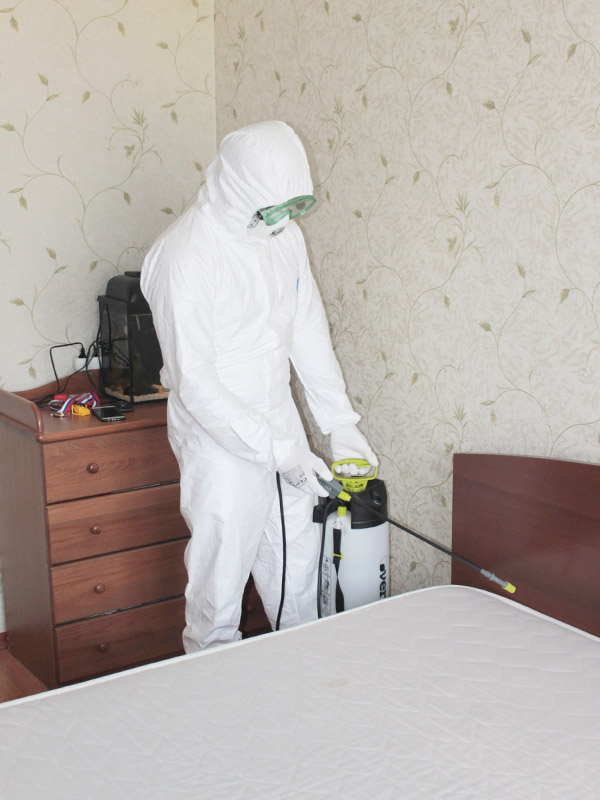
During control, an aqueous solution is sprayed onto bed frames, baseboards, etc. If possible, the bed should be disassembled so that the pesticide can reach everywhere. The pesticide solution used has a long-lasting effect, which is why surfaces should not be cleaned for some time. Thorough cleaning should be carried out before pest control! Bed bugs that come into contact with the surfaces during this time will be poisoned and start dying within 1-2 days. If there are many bed bugs, usually 2-3 treatments are performed, with intervals of 7-10 days. After treatment, the room should be ventilated for at least 2 hours, during which people should not be in the room. If there are so many bed bugs that the second or third treatment does not work, it is recommended to discard the bed entirely.
8 Recommendations for Fighting Bed Bugs:
- Notice the signs (bite marks on your skin, black spots on bed linen or bed frame, etc.)
- Change bedding frequently and use light-colored bedding if possible
- Thoroughly inspect luggage when traveling
- Inspect used furniture before bringing it home
- Inspect clothes and wash them at a high temperature before putting them in the closet
- When returning from a trip, take items out of your suitcase and place them on the floor, preferably in a garage, laundry room, or similar area where bed bugs are easier to detect.
- Maintain cleanliness and order to prevent bed bugs from accumulating and hiding.
- Call in specialists if you detect bed bugs.
Relevant Videos:
Bed Bug Detection – https://youtube.com/watch?v=YkuTLzJBYvY&feature=shared
Bed Bug Control – (40) Pest Control and Our Approach – YouTube
Sources:
- Bed Bugs Are Here Again, Home and Garden, 31 May 2020 https://naistekas.delfi.ee/artikkel/31313677/lutikad-on-jalle-siin
- Estonian Disinfection and Pest Control Companies Association – https://kahjur.ee/
- https://www.insecto.ee/kahjurid/lutikad/