Erasmus+ project
Erasmus+ Project “Cleaning Ergonomics – to Prevent Occupational Diseases and Accidents”
The international project “Cleaning Ergonomics – to Prevent Occupational Diseases and Accidents” took place from 2021 to 2024. Four countries participated: Estonia, Hungary, the Netherlands, and Finland. The project aimed to raise awareness of the most common causes of workplace accidents and occupational diseases in the cleaning sector. As part of the project, a variety of educational materials were developed to provide guidance for both cleaning staff and their supervisors on how to work efficiently while maintaining health and well-being. The materials focus on both the physical and mental principles of ergonomics, helping to promote safer and more sustainable cleaning practices.

Internationally recognised project
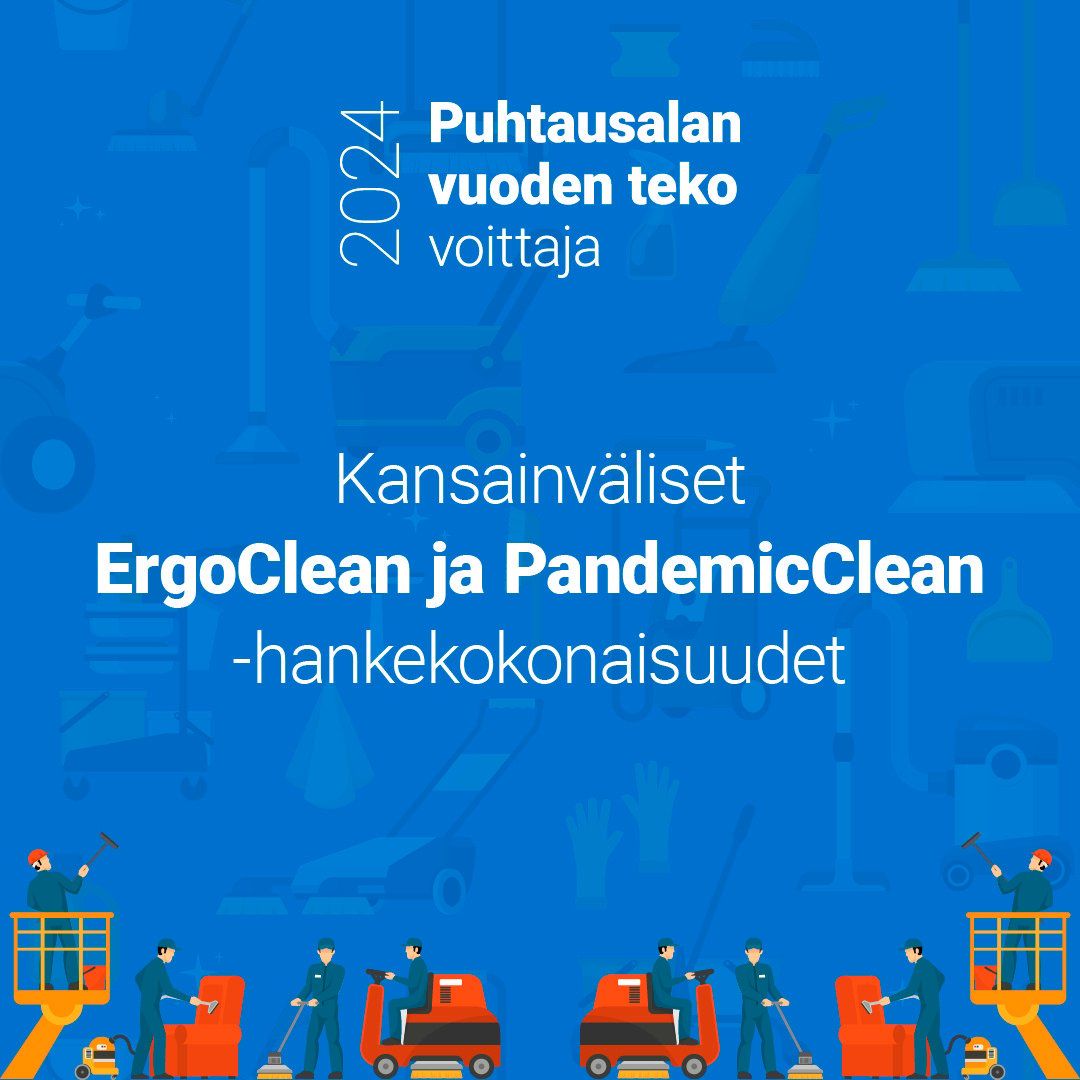
Winner of Finland’s Cleaning Industry Innovation Award 2024
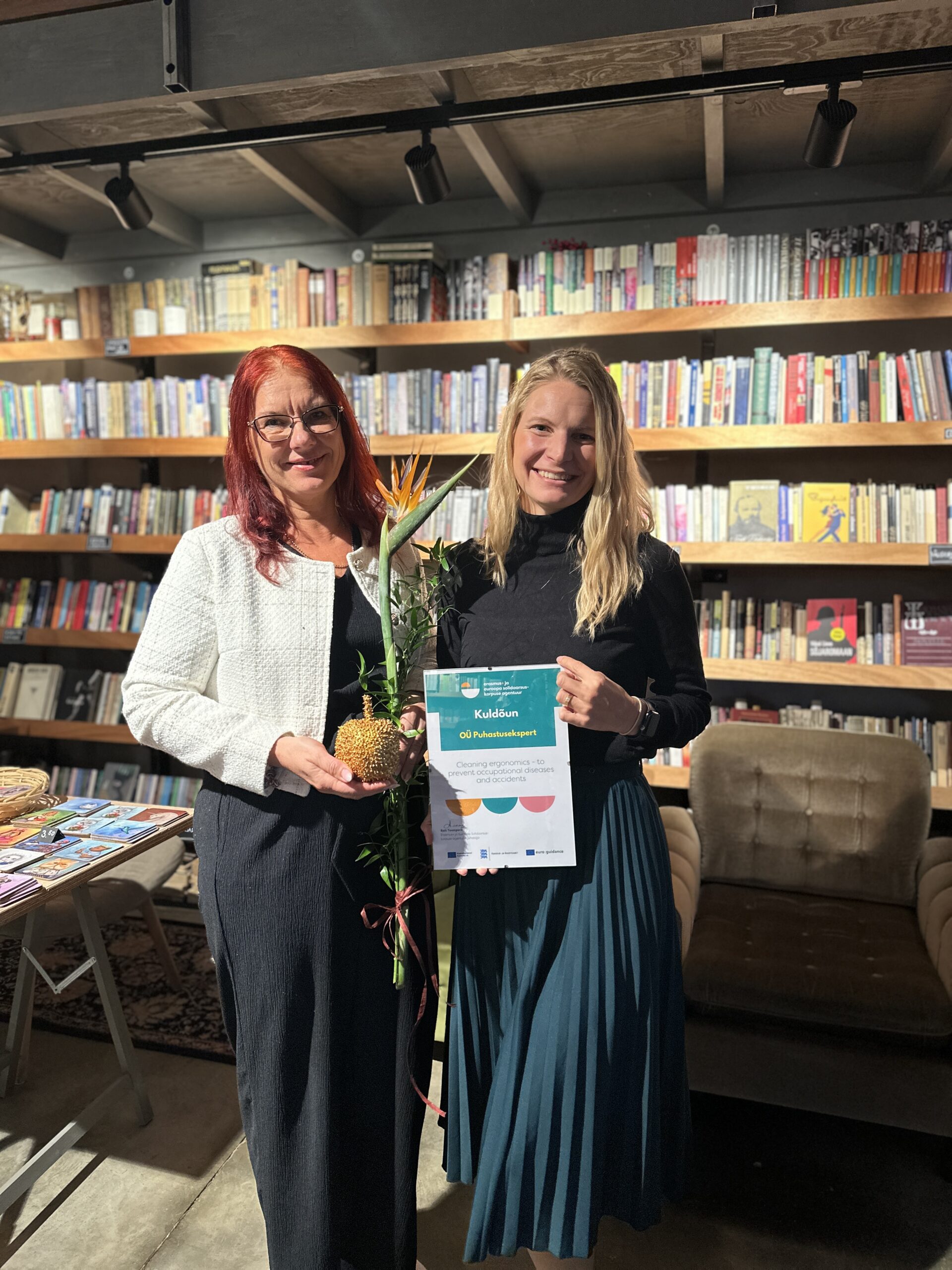
Year 2025 – Harno and Erasmus+ Recognition: “Golden Apple” Award for a Vocational Education Project
Research conducted within the project
SmartWear Experiments and the Impact of Cleaning Work on Muscles
We studied the impact of cleaning work on the muscular system using innovative SmartWear garments, which enable precise monitoring of muscle activity during the work process. The tests were conducted in Finland in October and November 2022, in cooperation with Keuda Cleaning Services staff.
Two cleaning professionals participated in the study, and each performed the tested cleaning methods twice.
Two cleaning professionals participated in the study, and each performed the tested cleaning methods twice.
The measurements were carried out using SmartWear clothing and technology developed by the Finnish company Myontec. The motion sensors embedded in the shirt and shorts were used to measure muscular load in the arms, shoulder area, and thighs, the number of micro-breaks taken during muscle activity, and the elevated position of the upper arms. It is important to note that not all muscle groups were measured — for example, SmartWear garments were not used to assess back strain.
A total of 111 tests were conducted, including repetitions. In some trials, activities were intentionally performed incorrectly to demonstrate how poor ergonomics are reflected in the results. The tests were part of the ErgoClean project, which involved partners from Estonia, Finland, Hungary, and the Netherlands. Cleaning methods and practices differ between countries, which is why the tests also included methods not commonly used in all the participating nations.
See the results HERE.
A total of 111 tests were conducted, including repetitions. In some trials, activities were intentionally performed incorrectly to demonstrate how poor ergonomics are reflected in the results. The tests were part of the ErgoClean project, which involved partners from Estonia, Finland, Hungary, and the Netherlands. Cleaning methods and practices differ between countries, which is why the tests also included methods not commonly used in all the participating nations.
See the results HERE.
Cleaning Ergonomics Training Videos
Based on the information collected during the project, the partners developed 20 training video scripts. The videos focus on 20 cleaning activities that may cause physical or mental strain, workplace accidents, or even occupational diseases.
The training videos were filmed in Tallinn in collaboration between Puhastusekspert and Eluolu Fotod.
The videos are visual and can be used by anyone, regardless of the language they speak. In the videos, a black-and-white image with a red cross indicates cleaning activities that, according to the project team, are less optimal or ergonomically incorrect. The red dots on the body highlight areas where tension may develop as a result of the activity. A color image with a green check mark represents the improved and recommended method proposed by the project team.
The training videos were filmed in Tallinn in collaboration between Puhastusekspert and Eluolu Fotod.
The videos are visual and can be used by anyone, regardless of the language they speak. In the videos, a black-and-white image with a red cross indicates cleaning activities that, according to the project team, are less optimal or ergonomically incorrect. The red dots on the body highlight areas where tension may develop as a result of the activity. A color image with a green check mark represents the improved and recommended method proposed by the project team.
The training videos can be conveniently used anywhere — in cleaning rooms, during training sessions, at home, or while cleaning any space.
The videos are available on the Puhastusekspert website.
The videos are available on the Puhastusekspert website.
Cleaning Ergonomics Visual Guide for Cleaners
This guide serves as supplementary material to the training videos created as part of the Erasmus+ project on cleaning Ergonomics. Each page includes a QR code linking directly to the corresponding training video.
It is a visual learning tool that should ideally be available in every cleaning room and can be used regardless of the language spoken. In the guide, black-and-white images indicate techniques that the project team has identified as incorrect, while color images represent proper, ergonomic movements designed to make cleaning safer and more comfortable for cleaners.
It is a visual learning tool that should ideally be available in every cleaning room and can be used regardless of the language spoken. In the guide, black-and-white images indicate techniques that the project team has identified as incorrect, while color images represent proper, ergonomic movements designed to make cleaning safer and more comfortable for cleaners.
Training Material for Cleaners
Cleaning Ergonomics Training Material for Supervisors
This training material is designed for supervisors and instructors who guide cleaning staff, helping make teaching clearer and more effective. It can also be used by anyone who is interested in cleaning ergonomics and seeking more information on the related research.
The material is intended to be used together with the 20 Cleaning Ergonomics training videos and the visual guide, both developed as part of the ErgoClean project, which aims to prevent occupational diseases and workplace accidents related to cleaning work.
The guide provides supervisors with detailed information on cleaning ergonomics: it explains how to teach the topic, shares research-based insights, answers “why” questions, and offers guidelines for giving feedback and measuring results.
The material is intended to be used together with the 20 Cleaning Ergonomics training videos and the visual guide, both developed as part of the ErgoClean project, which aims to prevent occupational diseases and workplace accidents related to cleaning work.
The guide provides supervisors with detailed information on cleaning ergonomics: it explains how to teach the topic, shares research-based insights, answers “why” questions, and offers guidelines for giving feedback and measuring results.
Training Material for Supervisors
A Holistic Approach to Cleaning Workload
Cleaners and cleaning supervisors consider their work to be highly meaningful. However, they often experience both physical and psychological stress, which is also influenced by the work environment.
A cleaner works in different spaces throughout the day — their workplace changes several times a day, which means they have limited control over the ergonomics of their working environment. Yet, the work environment has a major impact on cleaning ergonomics. This includes factors such as the condition of the premises, surface materials and furnishings, the cleanliness and orderliness of the rooms, as well as ventilation and waste management.
A cleaner works in different spaces throughout the day — their workplace changes several times a day, which means they have limited control over the ergonomics of their working environment. Yet, the work environment has a major impact on cleaning ergonomics. This includes factors such as the condition of the premises, surface materials and furnishings, the cleanliness and orderliness of the rooms, as well as ventilation and waste management.
As part of the project, surveys were conducted over the course of a month among cleaners and cleaning supervisors on the following topics:
You can read the report presenting the survey and research results HERE.
Project Partners:
Explore the surveys and reports conducted within the project on the
project’s website.
project’s website.

